
Our story
Tim and Anna Ferman, Gustav, and Astrid. Boise, Idaho.
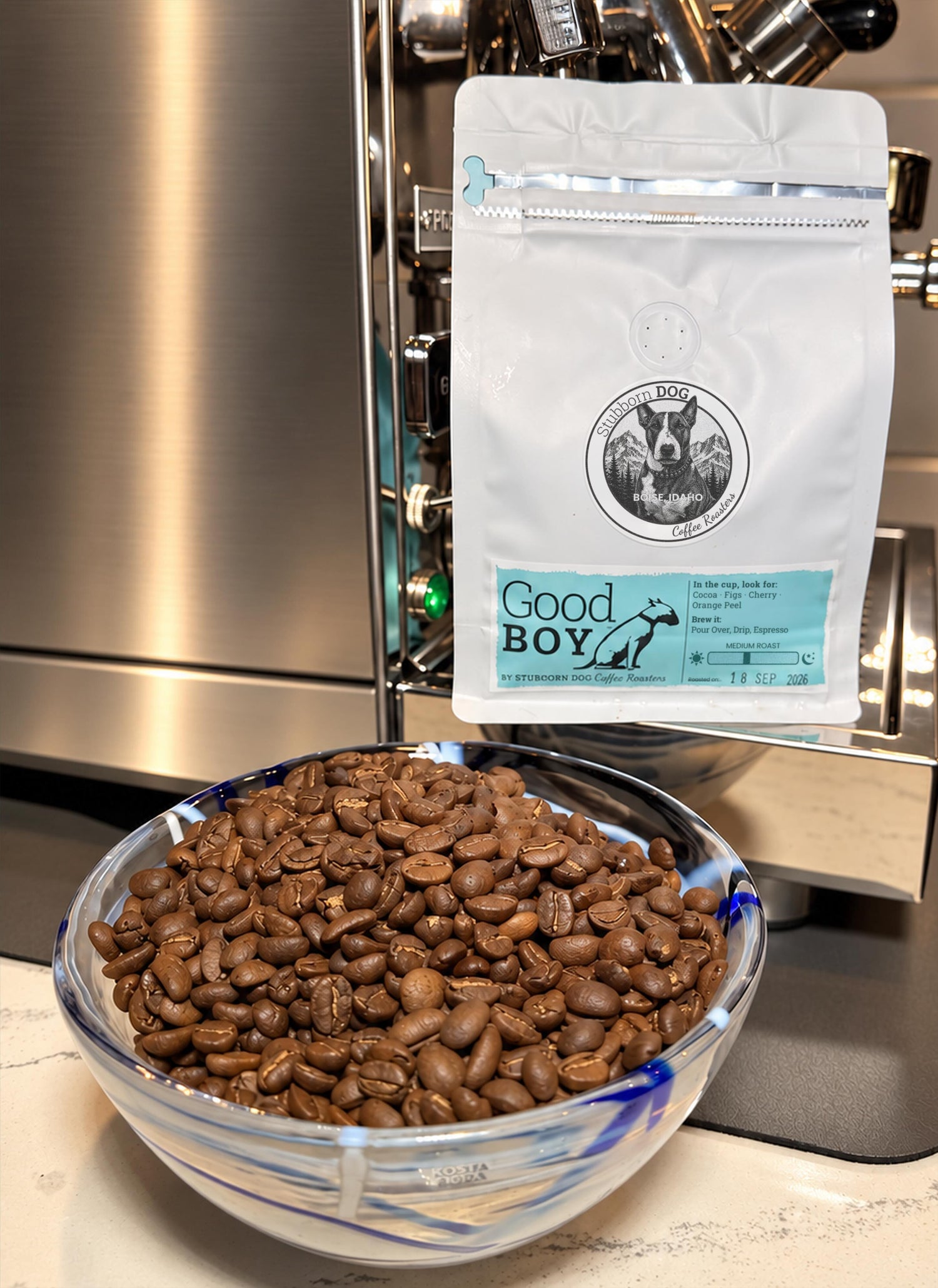
That's Gustav on the bag.
He and Astrid are bull terriers, which explains the name — Gustav is ten, Astrid is three, and they aren't related. They've been headlining our holiday batches since 2024: Astrid's Costa Rican Craze one year, Gustav's Crema Suprema the next. (They have not been humble about it.)
Anna is the reason any of this looks like something. She helps design the bags, gives feedback on the roasts, tolerates the tinkering in the kitchen (and the things that sometimes fly across the room sporadically) the rage language coming out of the garage along with occasionally unplanned smoke, and has packed most of these bags by hand — so if you put one on a scale, she was probably more generous than I would have been.
Good Boy.
What we're actually chasing
It's the taste, and how strange it is that so much of it is decided before anyone turns on a roaster. What elevation it grew, most of all — in thin, cool mountain air the cherry ripens slowly, and slow ripening is where density, sweetness, and bright acidity come from. The varietal. When the cherry was picked, and whether it was picked ripe. How it was processed after that, which can change a coffee more than the roast does. So we don't buy by the pound and sort it out later. We pick a lot, taste it, and buy that one. This time we bought a 150 lb bag; next time, we aim to go bigger.
How we choose
Flavor gets a vote, but not the only vote. We buy from family operations… farms where the people growing it have a long relationship with the land and a reason to care how the fruit comes off the tree. Careful growing and careful picking aren't separate from flavor. This one is a Honduras SHG, washed. SHG stands for Strictly High Grown — the Honduran grade for coffee raised above 1,200 meters, which is that slow ripening written into the grade itself. Washed means the cherry was pulped and the fruit fermented off the bean before drying, which gives you a clean cup where the origin shows through instead of the fruit sitting on top of it.
And we want to tell you where it came from — not a country, a place. Everything in this release came from one origin, one lot, grown on neighboring smallholder farms in Santa Bárbara and picked and processed together. If you taste something in the cup, there's a specific stretch of mountainside responsible for it.
Where it's made
The garage is where it started. My mentor Jeff pointed me at a small roasting system three years ago, and I roasted badly, then less badly, then well enough to start paying attention to what I was actually tasting. Chad and Rachel have given me honest feedback from the beginning, which is rarer and more useful than it sounds. A lot of other people told me to keep going. This first batch was roasted in Berkeley, California, where we're still learning on a bigger machine. The plan is a full Boise roastery next year.
The holiday bags have been a tradition for a while now. I'd like to keep it going — and with your help, make it better every year we do it.